Showing posts with label Society. Show all posts
Thursday, October 24

The Road Taken

This 1996 documentary takes a nostalgic ride through history to present the experiences of Black sleeping-car porters who worked on Canada's railways from the early 1900s through the 1960s.

There was a strong sense of pride among these men and they were well-respected by their community. Yet, harsh working conditions prevented them from being promoted to other railway jobs until finally, in 1955, porter Lee Williams took his fight to the union.

Claiming discrimination under the Canada Fair Employment Act, the Blacks won their right to work in other areas. Interviews, archival footage and the music of noted jazz musician Joe Sealy (whose father was a porter) combine to portray a fascinating history that might otherwise have been forgotten.

Watch embedded below or directly from the NFB

Continue reading →
Wednesday, November 21

The Dust Bowl

The Dust Bowl

Episode: Episode 1: The Great Plow-Up

The grasslands of the southern Plains were rapidly turned into wheat fields. Then following the early years of the drought, storms killed crops and livestock and literally rearranged the landscape. The worst storm of them all was on April 14, 1935—Black Sunday—a searing experience for everyone caught in it, including a young songwriter from Pampa, Texas, named Woody Guthrie.


Watch Episode 1: The Great Plow-Up on PBS. See more from The Dust Bowl.


Episode: Episode 2: Reaping the Whirlwind

Black Sunday was only halfway through the decade-long crisis. The storms continued. The Great Depression still affected people. Government programs were instituted to help. Learn what FDR’s administration did to try to keep the southern Plains from becoming a North American Sahara desert. Find out why some residents finally decided they had to give up and move somewhere else and how some held on.


Continue reading →
Tuesday, November 20

Fifty Shades of Grey: The Sex Story


Fifty Shades of Grey -The Sex Story is a 2011 erotic novel by British author E. L. James. Set largely in Seattle, it is the first instalment in a trilogy that traces the deepening relationship between a college graduate, Anastasia Steele, and a young business magnate, Christian Grey. It is notable for its explicitly erotic scenes featuring elements of sexual practices involving bondage/discipline, dominance/submission, sadism/masochism

''Fifty Shades of Grey: The Sex Story'' documentary examines the phenomenon of the UK's fastest selling paperback of all time.From visiting a spanking class, where novices are trained in the art of a good caning, to exploring the world of an S&M couple who have written sex contracts with each other and have honed their more extreme practice to perfection, this documentary uncovers what the Fifty Shades of Grey craze tells us about 21st-century Britain. The programme examines the sociological and cultural effects the book is having in the UK, as sales of obscure classical music and bondage gear increase.

Continue reading →

Vegucated

Vegucated is a guerrilla-style documentary that follows three meat- and cheese-loving New Yorkers who agree to adopt a vegan diet for six weeks and learn what it's all about.

They have no idea that so much more than steak is at stake and that the planet's fate may fall on their plates. Lured by tales of weight lost and health regained, they begin to uncover hidden sides of animal agriculture that make them wonder whether solutions offered in films like Food, Inc. go far enough.

Before long, they find themselves risking everything to expose an industry they supported just weeks before. But can their convictions carry them through when times get tough? What about on family vacations fraught with skeptical step-dads, carnivorous cousins, and breakfast buffets?

Part sociological experiment and part adventure comedy, Vegucated showcases the rapid and at times comedic evolution of three people who are trying their darnedest to change in a culture that seems dead set against it. Watch the trailer below and the documentary here or here.

Continue reading →
Wednesday, November 14

The Great Depression

In the American democracy of the 1930s two visions of liberty collided. 

Working men and women battled landowners and factory managers for the right to join a union. On the tenant farms and in the steel factories working people asserted their citizenship in the midst of great economic turmoil and a tide of government reform.

This is a first-rate documentary highlighting response of the people to crisis. Includes attention to unemployed,labor and farmer militancy, the "EPIC" campaign in California. By the producers of the better-know "Eyes on the Prize" series on the Civil Rights Movement. Especially important now, as the Right tries to dismantle every aspect of the New Deal and progressivism. Watch the series on the playlist below. 

Continue reading →
Tuesday, September 11

I Am Fishead

I am Fishead: A documentary about how psychopaths and antidepressants influence our society - a provocative snapshot of the world we live in.

Directed and Produced by
Misha Votruba and Vaclav Dejcmar
Length: 80 min.
Released: Sep 11 2011

It is a well-known fact that our society is structured like a pyramid. The very few people at the top create conditions for the majority below. Who are these people? Can we blame them for the problems our society faces today? Guided by the saying "A fish rots from the head." we set out to follow that fishy odor. What we found out is that people at the top are more likely to be psychopaths than the rest of us.

Who, or what, is a psychopath? Unlike Hollywood's stereotypical image, they are not always blood-thirsty monsters from slasher movies. Actually, that nice lady who chatted you up on the subway this morning could be one. So could your elementary school teacher, your grinning boss, or even your loving boyfriend. The medical definition is simple: A psychopath is a person who lacks empathy and conscience, the quality which guides us when we choose between good and evil, moral or not. Most of us are conditioned to do good things. Psychopaths are not. Their impact on society is staggering, yet altogether psychopaths barely make up one percent of the population.

Broken into three parts, our search for the fishead starts in New York City, on Wall Street, where a big chunk of the world power is concentrated. This small plot of city land is where the economic crisis erupted and what we found there has far-reaching consequences, both for the psychopaths and us normal folk.

The second part of the film touches on how, for a small number of people, overuse of antidepressants can result in behaviors that appear to mimic some psychopathic features. Although overuse of these medications will not produce psychopathy, they may stifle emotion and decrease the user's ability to feel empathy. They also may have the opposite effects, "normalizing" emotional experience and empathy. More than one-third of the Western population uses and, in some cases, abuses these drugs. But why? So why do we want to take a pill that flattens or normalizes our normal feelings? We think something sure smells fishy again.

It is not too far fetched to say that for the first time in history we not only praise psychopaths in the highest positions of power, but in many cases, they became our role models. On top of that, we don't seem to think it's a problem. In the third part, we come back to the idea of us, the normal people in our day-to-day life. How much different are we from the average psychopath? By embracing a superficial culture, each of us maybe unwillingly supports the fishead. Albert Einstein said, "The world is a dangerous place to live; not because of the people who are evil, but because of the people who don't do anything about it."

Through interviews with renowned psychologist Professor Philip Zimbardo, leading expert on psychopathy Professor Robert Hare, former President of Czech Republic and playwright Vaclav Havel, authors Gary Greenberg and Christopher Lane, professor Nicholas Christakis, among numerous other thinkers, we have delved into the world of psychopaths and heroes and revealed shocking implications for us and our society.

Watch below, hosted on YouTube, or this alternate YouTube source, or on Disclose TV.

Continue reading →
Saturday, September 8

The Elephant Man

Based on the true story of Joseph Merrick, a 19th-century Englishman afflicted with a disfiguring congenital disease. A Victorian surgeon rescues a heavily disfigured man who is mistreated while scraping a living as a side-show freak. Behind his monstrous facade, there is revealed a person of intelligence and sensitivity.

Stars John Hurt, Anthony Hopkins and Anne Bancroft.

Watch the trailer below and view the film at PutLocker, WatchFreeInHD, HDPlay or SockShare.

Continue reading →

History of the World in 2 Hours

A rapid-fire history of our world, from the beginning of time as we know it to present day. This two-hour CGI-driven special delves into the key turning points: the formation of earth, emergence of life, spread of man and the growth of civilization--and reveals their surprising connections to our world ...

What if we could tell you everything? The entire history of the world. Now, what if we told you we could do it in just 2 hours? We're going to tell the whole story... from the big bang to the present day, how the planet prepared for the rise of man, how the stone age led to the steam engine, how the first seeds sprouted into cities and civilizations. Everything is connected, and the path leads to you. It took history 13.7 billion years to unfold. We'll show you everything you need to know in the next 2 hours.

Watch below or on YouTubePutLocker, HDPlay, WatchFreeInHD or SockShare.

Continue reading →
Saturday, September 1

The Handmaid's Tale

Set in a Fascistic future America, The Handmaid's Tale tells the story of Kate, a handmaid. In this America, the religious right has taken over and gone hog-wild. Kate is a criminal, guilty of the crime of trying to escape from the US, and is sentenced to become a Handmaid.

The job of a Handmaid is to bear the children of the man to whom she is assigned. After ruthless group training by Aunt Lydia in the proper way to behave, Kate is assigned as Handmaid to the Commander. Kate is attracted to Nick, the Commander's chauffeur. At the same time, a resistance movement begins to challenge the regime.

Download the book in mobi or epub, and watch the film here or here.
Continue reading →
Saturday, August 25

Philosophy: A Guide to Happiness


We tend to accept that people in authority must be right. It’s this assumption that Socrates wanted us to challenge by urging us to think logically about the nonsense they often come out with, rather than being struck dumb by their aura of importance and air of suave certainty.
This six part series on philosophy is presented by popular British philosopher Alain de Botton, featuring six thinkers who have influenced history, and their ideas about the pursuit of the happy life.
Socrates on Self-Confidence (Part 1) – Why do so many people go along with the crowd and fail to stand up for what they truly believe? Partly because they are too easily swayed by other people’s opinions and partly because they don’t know when to have confidence in their own.
Epicurus on Happiness (Part 2) – British philosopher Alain De Botton discusses the personal implications of the ancient Greek philosopher Epicurus (341-270BCE) who was no epicurean glutton or wanton consumerist, but an advocate of “friends, freedom and thought” as the path to happiness.
Seneca on Anger (Part 3) – Roman philosopher Lucious Annaeus Seneca (4BCE-65CE), the most famous and popular philosopher of his day, took the subject of anger seriously enough to dedicate a whole book to the subject. Seneca refused to see anger as an irrational outburst over which we have no control. Instead he saw it as a philosophical problem and amenable to treatment by philosophical argument.
Montaigne on Self-Esteem (Part 4) – Looks at the problem of self-esteem from the perspective of Michel de Montaigne (16th Century), the French philosopher who singled out three main reasons for feeling bad about oneself – sexual inadequecy, failure to live up to social norms, and intellectual inferiority – and then offered practical solutions for overcoming them.
Schopenhauer on Love (Part 5) – Alain De Botton surveys the 19th Century German thinker Arthur Schopenhauer (1788-1860) who believed that love was the most important thing in life because of its powerful impulse towards ‘the will-to-life’.
Nietzsche on Hardship (Part 6) – British philosopher Alain De Botton explores Friedrich Nietzsche’s (1844-1900) dictum that any worthwhile achievements in life come from the experience of overcoming hardship. For him, any existence that is too comfortable is worthless, as are the twin refugees of drink or religion.
Continue reading →

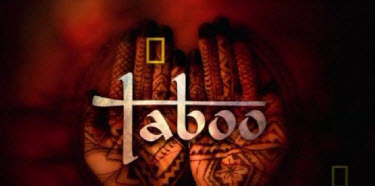
Taboo: Mating

How far would you go in the name of love? Would you drink your partner’s blood to secure your bond? Or carve their hand print into your flesh to show your devotion?

Could you marry someone behind bars, knowing you may never be able to be together? Or risk your life to steal another man’s wife?

Delve into rituals, ancient and modern, used to bond one human to another and uncover the extremes of human passion and devotion. The desire to find a mate is one of humanity’s fundamental instincts, but what happens to men and women when their love is taboo?

Taboo takes viewers on a journey beyond their comfort zones and across cultural borders to explore addictions and lifestyles that are acceptable in some cultures but forbidden, illegal, or even reviled in others.

Continue reading →

Why Beauty Matters

Philosopher Roger Scruton presents a provocative essay on the importance of beauty in the arts and in our lives.
In the 20th century, Scruton argues, art, architecture and music turned their backs on beauty, making a cult of ugliness and leading us into a spiritual desert.
Using the thoughts of philosophers from Plato to Kant, and by talking to artists Michael Craig-Martin and Alexander Stoddart, Scruton analyses where art went wrong and presents his own impassioned case for restoring beauty to its traditional position at the center of our civilization. Watch below.  

Continue reading →

First Earth

First Earth: Uncompromising Ecological Architecture

First Earth is a documentary about the movement towards a massive paradigm shift for shelter – building healthy houses in the old ways, out of the very earth itself, and living together like in the old days, by recreating villages.
It is a sprawling film, shot on location from the West Coast to West Africa. An audiovisual manifesto filmed over the course of 4 years and 4 continents, First Earth makes the case that earthen homes are the healthiest housing in the world; and that since it still takes a village to raise a healthy child, it is incumbent upon us to transform our suburban sprawl into eco-villages, a new North American dream.
First Earth is not a how-to film; rather, it’s a why-to film. It establishes the appropriateness of earthen building in every cultural context, under all socio-economic conditions, from third-world communities to first-world countrysides, from Arabian deserts to American urban jungles.
In the age of environmental and economic collapse, peak oil and other converging emergencies, the solution to many of our ills might just be getting back to basics, focusing on food, clothes, and shelter. We need to think differently about house and home, for material and for spiritual reasons, both the personal and the political.

Continue reading →
Friday, August 24

James Burke: Connections


Connections explores an Alternative View of Change (the subtitle of the series) that rejects the conventional linear and teleological view of historical progress. Burke contends that one cannot consider the development of any particular piece of the modern world in isolation.
Rather, the entire gestalt of the modern world is the result of a web of interconnected events, each one consisting of a person or group acting for reasons of their own (e.g., profit, curiosity, religious) motivations with no concept of the final, modern result of what either their or their contemporaries’ actions finally led to. The interplay of the results of these isolated events is what drives history and innovation, and is also the main focus of the series and its sequels.
To demonstrate this view, Burke begins each episode with a particular event or innovation in the past (usually Ancient or Medieval times) and traces the path from that event through a series of seemingly unrelated connections to a fundamental and essential aspect of the modern world. For example, The Long Chain episode traces the invention of plastics from the development of the fluyt, a type of Dutch cargo ship. Watch 30 full episodes below, each 45 minutes long. 

Connections (1978)

1. The Trigger Effect details the world’s present dependence on complex technological networks through a detailed narrative of New York City and the power blackout of 1965.
2. Death in the Morning examines the standardization of precious metal with the touchstone in the ancient world.
3. Distant Voices suggests that telecommunications exist because Normans had stirrups for horse riding which in turn led them to further advancements in warfare.
4. Faith in Numbers examines the transition from the Middle Ages to the Renaissance from the perspective of how commercialism, climate change and the Black Death influenced cultural development.
5. The Wheel of Fortune traces astrological knowledge in ancient Greek manuscripts from Baghdad’s founder, Caliph Al-Mansur, via the Muslim monastery/medical school at Gundeshapur, to the medieval Church’s need for alarm clocks (the water horologium and the verge and foliot clock).
6. Thunder in the Skies implicates the Little Ice Age (ca. 1250-1300 AD) in the invention of the chimney, as well as knitting, buttons, wainscoting, wall tapestries, wall plastering, glass windows, and the practice of privacy for sleeping and sex.
7. The Long Chain traces the invention of the Fluyt freighter in Holland in the 1500s. Voyages were insured by Edward Lloyd (Lloyd’s of London) if the ships hulls were covered in pitch and tar which came from the colonies until the American Revolution in 1776.
8. Eat, Drink and Be Merry begins with plastic, the plastic credit card and the concept of credit then leaps back in time to to the Dukes of Burgundy, which was the first state to use credit.
9. Countdown connects the invention of the movie projector to improvements in castle fortifications caused by the invention and use of the cannon.
10. Yesterday, Tomorrow and You. A bit of a recap: change causes more change. Start with the plow, you get craftsmen, civilization, irrigation, pottery and writing, mathematics, a calendar to predict floods, empires, and a modern world where change happens so rapidly you can’t keep up.

Connections² (1994)

1. Revolutions & Sentimental Journeys – What do all these things have in common – 3 grandfathers’ lifetimes, 2 revolutions, 1750 Cornwall tin mines, water in mines, pumps, steam engines, Watt’s copier, carbon paper, matches, phosphorus fertilizer, trains and gene pool mixing, traveling salesmen, 24 hour production, educated women, telephone, high-rise buildings, Damascus’s swords, steel, diamond, carborundum, graphite, x-ray crystalography, DNA and gene therapy?
2. Getting it Together & Whodunit? – James Burke explains the relationship between hot air balloons and laughing gas, and goes on to surgery, hydraulic water gardens, hydraulic rams, tunneling through the Alps, the Orient Express, nitroglycerin, heart attacks & headaches, aspirin, carbolic acid, disinfectant, Mabach-Gottlieb Daimler-Mercedes, carburetors, and helicopters.
3. Something for Nothing & Echoes of the Past – How do shuttle landings start with the vacuum which was forbidden by the Church? Burke takes us on an adventure with barometers, weather forecasting, muddy and blacktop roads, rain runoff, sewage, a cholera epidemic, hygiene, plumbing, ceramics, vacuum pumps, compressed air drills, tunnels in the Alps, train air brakes, Tesla hydroelectric power, electric motor, Galvani’s muscle-electricity connection, Volta’s battery, and gyroscopes.
4. Photo Finish & Separate Ways – Another series of discoveries examined by Burke which include Eastman’s film Kodak Brownie, the disappearing elephant scare of 1867, billiard balls, celluloid as a substitute for ivory, false teeth that explode, gun cotton, double shot sound of a bullet, Mach’s shock wave, aerodynamics, nuclear bombs, Einstein’s relativity, Einstein’s selenium, movie talkies, the vacuum tube amplifier, radio, railroad’s use of wood, coal tar, gas lights, creosote, rubber, the Zeplin, the automobile and finally how Adeline vulcanizes tires.
5. High Times & Deja Vu – The connection between polyethylene and Big Ben is a few degrees of separation, so let’s recount them: polyethylene, radar, soap, artificial dyes, color perception, tapestries, far East goods, fake lacquer furniture, search for shorter route to Japan, Hudson in Greenland, the discovery of plentiful whales, printing the Bible, Mercator map, Martin Luther’s protest, star tables, a flattened earth, George Graham’s clock which of course leads to Big Ben.
6. New Harmony & Hot Pickle – A dream of utopia is followed from microchips to Singapore, from the transistor to its most important element, germanium, to Ming Vases and cobalt fakes, which contribute to the blue in blue tiles used in special Islamic places, and Mosaics in Byzantium, the donation of Constantine, Portuguese navigation by stars, the “discovery” of Brazil, Holland’s tolerance, diamond merchants, optics, microscopes, beasts of science, Frankenstein’s monster, and finally New Harmony.
7. The Big Spin & Bright Ideas – is a California lottery which is basically gambling. From here Burke takes us through Alexander Flemming’s chance discovery of penicillin, to Vierschoft’s observation that contaminated water is related to health, to Schliemann’s search for City of Troy, the theft of discovered treasure, and to Vierschoft’s criminology.
8. Making Waves & Routes – a permanent wave in ladies’ hair is aided by curlers, and this leads us to explore borax, taking us to Switzerland, Johan Sutter’s scam, and the saw mill, and that means the discovery of gold leading to the 1848 California gold rush.
9. One Word & Sign Here – The one word that changed everything was “filioque” but we must make a trip to Constantinople, visit the Renaissance, meet Aldus Manutius of Venice, explore abbreviations, learn about Italic print, which resulted in an overload of books, requiring the development of a cataloging system.
10. Better Than the Real Thing & Flexible Response – starts in the 1890′s with bicycles and bloomers and then takes a look at boots, zippers, sewing machines, and infinitesimal difference. Speaking of small, we look at microscopic germs, Polarized light, sugar, coal, iron, micro-bubbles, the spectroscope, night vision, beri-beri resulting from polished rice, chickens, war rationing, and finally, we arrive at vitamins in a pill.

Connections³ (1997)

1. Feedback – Electronic agents on the Internet and wartime guns use feedback techniques discovered in the first place by Claude Bernard, whose vivisection experiments kick off animal rights movements called humane societies that really start out as lifeboat crews rescuing people from all the shipwrecks happening because of all the extra ships out there…
2. What’s in a Name? – Remember the cornflakes from last episode? Thanks to the fact that corncobs make adhesives to bond Carborundum, otherwise known as silicon carbide, to grinding wheels used to grind light-bulbs.
3. Drop the Apple – At the Smithsonian, we learn of electric crystals that help Pierre and Marie Curie discover what they call radium, and then Langevin uses the piezo-electric crystal to develop sonar that helps save liberty ships (from German U-boats) put together with welding techniques using acetylene made with carbon arcs…
4. An Invisible Object – Black holes in space, seen by the Hubble Telescope, brought into space with hydrazine fuel, which was a by-product of fungicidal French vines, fueled by quarantine conventions and money orders, American Express and Buffalo Bill, Vaudeville and French battles, Joan of Arc and the Inquisition…
5. Life is No Picnic – Instant coffee gets off the ground in World War II and Jeeps lead to nylons and stocking machines smashed by Luddites, who were defended by Byron, who meets John Galt in Turkey, avoiding the same blockade that inspires the “Star-Spangled Banner,”…
6. Elementary Stuff – Alfred Russel Wallace, who studied beetles, Oliver Joseph Lodge and telegraphy, a radio designed by Reginald Fessenden, which was used by banana growers, studied by Augustin Pyramus de Candolle, who got the Swiss to use stamps on postcards with cartoons of Gothic Houses of parliament, which in turn had been inspired by Johann Gottfried Herder’s Romantic movement…
7. A Special Place – Professor Sir Alec Jeffries of Leicester University in England develops DNA profiling and schlieren photography used by Theodore von Karman to study aerodynamics and Anthony Fokker’s airborne machine guns and the Red Baron and geography and Romantic ideas that start in Italy…
8. Fire from the Sky – Thanks to Continental Drift and Alfred Wegener’s passion for mirages, magic images from the sister of King Arthur, whose chivalry supposedly triggers the medieval courtly love answer to adultery, which were in turn inspired by the free love ideas of the mystical Cathars, who lived next to the mystical cabalists…
9. Hit the Water – Thanks to napalm, made with palm oil, also used for margarine, stiffened with a process using kieselguhr that comes from plankton living in currents studied by Ballot bbefore observing the Doppler Effect that caused Fizeau to measure the speed of light speed. Fizeau’s father-in-law’s friend, Prosper Mérimée, who wrote “Carmen”…
10. In Touch – Starting from an attempt for cheaper fusion power using superconductivity, which was discovered by Onnes, with liquid gas provided by Cailletet, who carried out experiments on a tower built by Eiffel, who also built the Statue of Liberty with its famous poem by the Jewish activist Emma Lazarus…
Continue reading →
Sunday, July 29

Wallander: Season 3

WALLANDER: SEASON 3


Kenneth Branagh returns to his remarkable Emmy and Golden Globe-nominated role as the soul-searching Swedish cop in Wallander III, with three gripping new Kurt Wallander cases based on the character created by bestselling novelist and father of the Nordic noir craze, Henning Mankell.
The somber inspector's hard-won and fragile new hope is put to the test when the most brutal of crimes — and his own demons — are unearthed. But you've got to give the emotionally uneasy cop credit for even trying.


An Event in Autumn
Whilst investigating the death of a pregnant girl,pushed off a ferry,Wallander discovers a ten-year old skeleton in the garden of the house where he lives with girl-friend Vanja. Elderly neighbour Fredrik points him towards the house's previous occupant,violent pimp Jan Petrus,whose daughter Ellika went missing a decade earlier. However,after the pregnant girl has been identified by a friend,who is also killed,Ellika contacts Wallander and gives him vital information to help identify the skeleton and her murderer. A confrontation with the killer also solves the more ...Watch online at one  two  three  four or five.

The Dogs of Riga
The discovery of two slain youths in a dinghy which washes into Ystad brings hard-drinking Latvian detective Karlis Liepa from Riga. He tells Wallander they were his informants in a drug-smuggling ring after the dinghy,containing cocaine,is stolen. Liepa is murdered on his return home,Wallander travelling to Riga to learn that the secretive detective did not show his case notes to his colleagues.After Wallander has discovered that his hotel room is bugged and he is being shadowed journalist Sergei Upitis tells him that Liepa was investigating corruption in his own ... Watch online at one  two  three  four or  five.

Before the Frost
An elderly woman is murdered in a wood by a man she saw setting fire to swans. He buries her corpse with a bible annotating the book of Revelations and from his finger-prints he is identified as Jannek Langas,a religious maniac and arsonist. He has escaped from a secure unit but nonetheless has a healthy bank account in an assumed name. At the same time Anna,a friend of Linda,disappears after a cryptic visit to Wallander. Following Langas's suicide by immolation Wallander learns that Langas and Anna belonged to the same,fundamentalist Christian group and that other ... Watch online at one  two  three  four or  five.


Watch seasons one and two here
Continue reading →
Tuesday, July 3

End Of The Road: How Money Became Worthless

In 2008 the world experienced one of the greatest financial turmoils in modern history. Markets around the world started crashing, stock prices plummeted, and major financial institutions, once thought to be invincible, started showing signs of collapse. Governments responded quickly, issuing massive bailouts and stimulus packages in an effort to keep the world economy afloat. Watch the trailer below and the documentary on nowvideo.eu or zalaa.com.

Continue reading →
Friday, June 8

Snow Flower and the Secret Fan

Snow Flower and the Secret Fan: In 19th-century China, seven year old girls Snow Flower and Lily are matched as laotong - or "old sames" - bound together for eternity. Isolated by their families, they furtively communicate by taking turns writing in a secret language, nu shu, between the folds of a white silk fan. In a parallel story in present day Shanghai, the laotong's descendants, Nina and Sophia, struggle to maintain the intimacy of their own childhood friendship in the face of demanding careers, complicated love lives, and a relentlessly evolving Shanghai. Drawing on the lessons of the past, the two modern women must understand the story of their ancestral connection, hidden from them in the folds of the antique white silk fan, or risk losing one another forever. Watch on HDPlay, PutLocker or WatchFreeInHD. Trailer below.

Continue reading →
Wednesday, May 23

War Horse: The Real Story

The truth about the million British horses that served in World War I is even more epic than Steven Spielberg's War Horse feature film. This documentary tells their extraordinary, moving story, begining with the mass call-up of horses from every farm and country estate in the land. Racing commentator Brough Scott tells the tale of his aristocratic grandfather General Jack Seely and his beloved horse Warrior, who would become the most famous horse of the war. The British Army hoped its illustrious cavalry regiments would win a swift victory, but it would be years before they enjoyed their moment of glory. Instead, in a new era of mechanised trench warfare, the heavy horses transporting... Watch on HDPlay one or two, NovaMov, OVFile or VideoWeed.
Continue reading →

Baka: A Cry From The Rainforest

Phil Agland revisits the Baka Pygmy family he filmed 25 years ago in his BAFTA award winning documentary 'Baka: People of the Rainforest'.

An extraordinary journey into the heart of the rainforest in Cameroon, where the past of the Baka revisits them through watching the old film projected in the forest - raising questions about their old life in the forest and what is happening to them now.

Watch the YouTube clip below, and watch the documentary on HDPlay, FileBox, SockShare, NovaMov, NowVideo or VideoWeed.

Continue reading →
Wednesday, April 11

Cocaine: History Between the Lines

This two-hour History Channel special goes inside the history of the second most used illicit drug in America. The human appetite for this narcotic goes all the way back to 3000 B.C., when South Americans chewed coca leaves, thinking they were a gift from God.

But it wasn’t until 1855, when cocaine was first extracted from the coca leaf and used in powder form that its use spiked. Initially it was utilized as an anesthesia.

Soon, famed psychologist Sigmund Freud touted it as an effective cure for depression and impotence. In 1886, John Pemberton, an Atlanta pharmacist, added it to his new soft drink: Coca Cola or Coke for short. In 1914, the drug was outlawed, but the damaged had been done. Watch online via WatchFreeInHD, HDPlay, SockShare or PutLocker.
Continue reading →